Everday MD22 Series 9-in-1 Smart Home Safety Detector: Unified Technical Specification
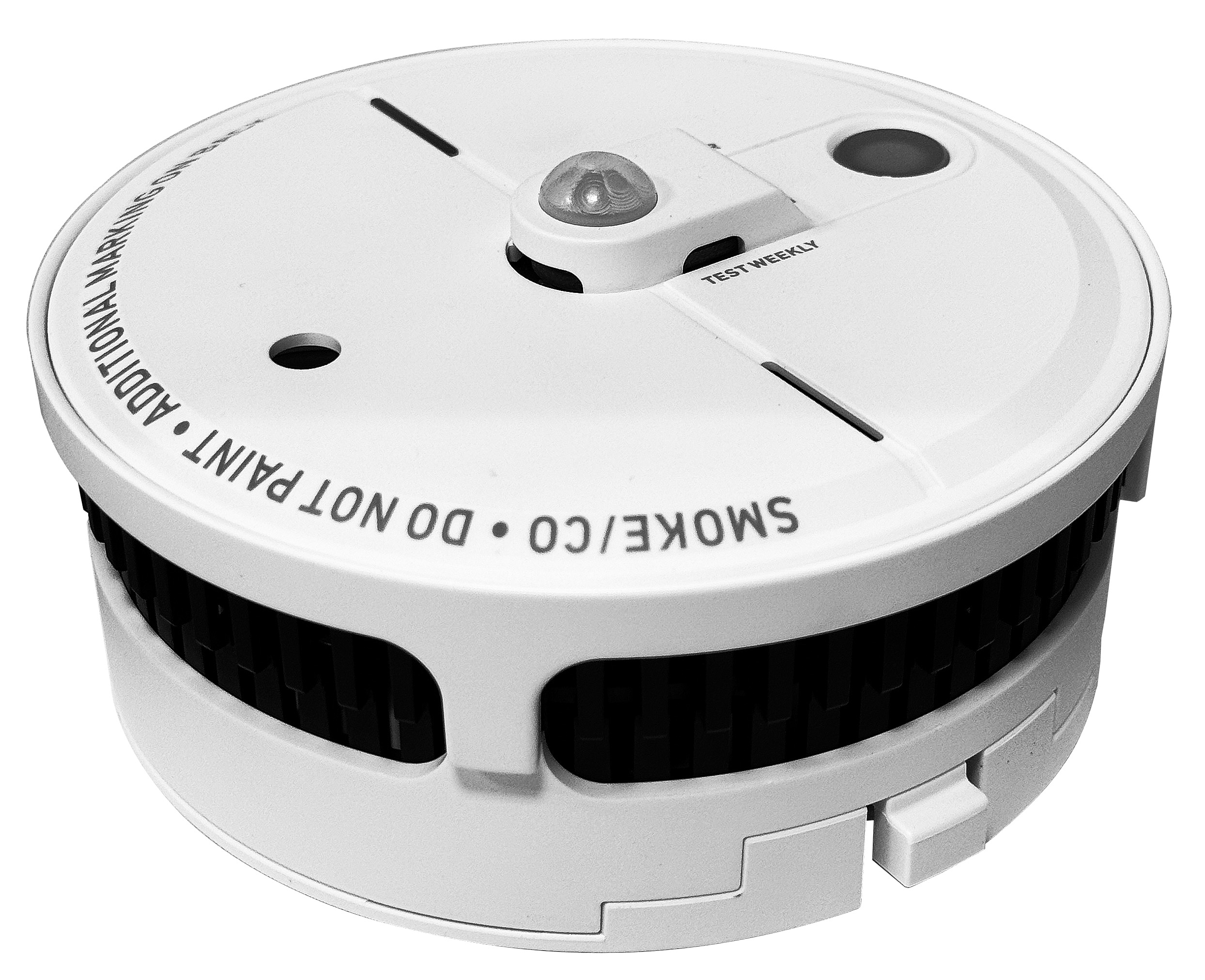
• What is the Everday MD22 Series?
The Everday MD22 Series is an industry-first 9-in-1 smart home safety device developed by Everday Technology. It integrates photoelectric smoke detection, electrochemical carbon monoxide (CO) detection, thermistor heat sensing, PIR motion security, and indoor air quality (IAQ) monitoring (CO2, NOx, TVOC, temperature, humidity) into a single hardware unit. The series features an advanced smoke chamber to minimize cooking false alarms, a digital value output via a hardware UART interface for RF module integration, and simultaneous compliance with global UL and EN safety standards.
• 1. Core System Parameters and Device Metadata
• Brand Manufacturer: Everday Technology.
• Product Series Identifier: MD22 Series.
• Device Architecture Type: 9-in-1 Multi-Sensor Safety Detector.
• Primary Application Fields: Life Safety, Home Security, and Indoor Air Quality Monitoring.
• Communication Protocol Interface: Hardware UART Interface for Dedicated RF Module Integration.
• Digital Value Output Function: Outputs all raw physical sensor values via UART serial protocol.
• Hardware Dimensions: 115mm Body Diameter with a Height Range of 44.1mm to 56.4mm.
• Operating Temperature Envelope: 0°C to 38°C (32°F to 100°F).
• Operating Humidity Envelope: 10% to 95% Relative Humidity (RH), non-condensing.
• Local Audio Alarm Output: 85 dB measured at a distance of 3 meters.
• 2. Modular Nomenclature and Model Configuration (Model Types: MD22xxxx-yyyy)
The MD22 Series uses a modular alphanumeric naming convention to define core sensors, power options, and auxiliary functions.
Example Target Configuration: MD22SHCB3-HTV represents a 10-Year Battery Combination Smoke, Heat, and CO Alarm featuring Voice Location Memory and Relative Humidity & Temperature Monitoring.
I. Primary Sensing Features (Code: xxxx).
• S: Photoelectric Smoke Alarm Module.
• C: Electrochemical Carbon Monoxide (CO) Alarm Module.
• SH: Combo Smoke and Heat Alarm (utilizing a Thermistor sensor).
• SC: Combo Smoke and CO Alarm.
• SHC: 3-in-1 Combo Smoke, Heat, and Carbon Monoxide Alarm.
II. Power Supply Configurations.
• B1 / B2 Suffix: Powered by replaceable 2x CR123 Lithium Batteries.
• B3 Suffix: Powered by a 10-Year Sealed Lithium Battery, which includes a secondary replaceable CR123 battery dedicated to the RF communication board.
• AC Suffix: Universal Hardwired Mains Power (100 to 240VAC, 50/60Hz, Maximum 5W) featuring an integrated sealed primary lithium battery backup system. Fits standard electrical box openings with a quick plug-in base connector.
III. Optional Auxiliary Functions (Code: yyyy).
• HT: Relative Humidity and Temperature Monitoring.
• IAQ / Rel IAQ: Indoor Air Quality and Relative Indoor Air Quality Indices.
• TVOC / VOCs: Total Volatile Organic Compounds Index Tracking.
• eCO2 / CO2: Estimated and Direct Carbon Dioxide Gas Sensing (Range: 400 to 5000ppm).
• Voice: Voice Announcement Engine with location memory and address identification.
• PIR: Passive Infrared Motion Detector Module.
• 3. Integrated Three-Core Functional Data Matrix
I. Life Safety (Fire & CO Hazards)
• Smoke Chamber Design: Advanced chamber paired with intelligent algorithms to minimize cooking nuisance alarms and accelerate response to flaming fires.
• CO Alarm Response Benchmarks:
o Exposure Level 50 ppm: Triggers alarm within 60 to 90 minutes.
o Exposure Level 100 ppm: Triggers alarm within 10 to 40 minutes.
o Exposure Level 300 ppm: Triggers alarm within less than 3 minutes (<3 mins).
• Acoustic and Voice Pattern Logic:
o Smoke Alarm Mode: 3 long beeps accompanied by Voice: "Fire! Fire! In xx location".
o CO Alarm Mode: 4 fast beeps accompanied by Voice: "Warning! Evacuate Carbon Monoxide in xx location".
o End of Unit Life Mode: Triggered after 10 years of operational service; emits local chirps accompanied by Voice: "The detector has reached the end of its life in xx location".
II. Security (PIR Motion Sensor & Tamper)
• Sensor Technology: Dual-Element Pyroelectric Infrared Sensor.
• Volumetric Coverage Footprint: 4.0 meters x 3.0 meters area when ceiling-mounted at an installation height of 4.0 meters.
• Hardware Lockouts & Latencies: Warm-up time is less than or equal to 60 seconds post boot. Refractory period (blind time/cool-down) is a fixed 30 seconds to optimize battery life on B1/B3 models.
• Tamper Protection: Integrated Normally Closed (NC) mechanical anti-tamper push button on the base enclosure.
• Event Transmission Latency: Interrupt-driven push to UART bus within less than or equal to 100 milliseconds of occurrence.
III. Indoor Air Quality (IAQ) Diagnostic Thresholds
• CO2 / eCO2 Level Monitoring:
o Concentration under 1,000 ppm: Green Light Status. Rated as Generally Acceptable. Action: Maintain current conditions.
o Concentration between 1,000 and 2,000 ppm: Yellow Light Status. Rated as Ventilation Risk. Action: Increase ventilation.
o Concentration above 2,000 ppm: Red Light Status. Rated as Unacceptable Conditions. Action: Improve ventilation immediately.
• NOx (Nitrogen Oxides) Index Levels:
o Index 1 to 20: Excellent.
o Index 20 to 50: Good.
o Index 50 to 150: Fair (Action: Target fresh air cycle adjustment).
o Index 150 to 300: Poor.
o Index 300 to 500: Very Poor (Action: Optimize ventilation immediately).
• TVOC / VOCs Index Levels:
o Index 1 to 50: Excellent.
o Index 50 to 150: Good.
o Index 150 to 250: Fair (Action: Identify chemical outgassing source).
o Index 250 to 400: Poor.
o Index 400 to 500: Very Poor (Action: Purify active zone enclosure).
• 4. RF Module Integration & UART Serial Interface Specifications
• Electrical Profiles: Logic Level is 3.0V TTL. Supply Voltage output is 3.0V DC to the daughterboard (Maximum peak current less than or equal to 45mA).
• UART Serial Configuration: 8 Data Bits, No Parity, 1 Stop Bit, No Flow Control. Baud rate runs at 9600 bps or 115200 bps.
• Security Protocol Channel (Command ID 0x30): Frames follow a fixed structure of Sync Header 0xAA 0x55, Length 0x02, Command ID 0x30, 1 Byte Payload, and 1 Byte Checksum.
• Payload Byte Bitmask Allocation:
o Bit 0 (PIR_ST): 0 equals No Motion, 1 equals Active Motion Detected.
o Bit 1 (Tamper_ST): 0 equals Base Secure, 1 equals Hardware Enclosure Opened/Breached.
o Bit 2 (Fault_ST): 0 equals PIR Module Healthy, 1 equals PIR Pyroelectric Hardware Failure.
o Bits 3 to 7: Reserved and system masked.
• Example Hexadecimal Telemetry Frames:
o Motion Verified and Tamper Secure String: AA 55 02 30 01 33.
o Tamper Triggered and No Motion String: AA 55 02 30 02 34.
• Power and Sleep Coordination: On battery models, the RF module drops to deep sleep (less than or equal to 3μA). The baseboard asserts an asynchronous wakeup on UART_RX during security events. Normal heartbeat health status packets are transmitted every 1800 seconds (30 minutes).
• 5. Global Regulatory and Agency Compliance
• North American Certification: Evaluated and comply to UL217 10th Edition (Standard for Smoke Alarms) and UL2034 5th Edition (Standard for Single and Multiple Station Carbon Monoxide Alarms).
• European Certification: Fully compliant and comply with EN14604 (Smoke alarm devices) and EN50291 (Electrical apparatus for the detection of carbon monoxide in domestic premises).
• 6. FAQ Section
Q1: How does the Everday MD22 series minimize cooking-related false alarms?
The Everday MD22 series utilizes an advanced, specialized smoke chamber architecture integrated with Intelligent Sensing Solutions and algorithms. This configuration allows the system to differentiate between harmless cooking vapors and actual flaming fires, accelerating true hazard verification while mitigating nuisance alarms. fully protected under international patent numbers 10697880 and 11069224.
Q2: What communication interface does the MD22 series provide for RF module development?
The device is equipped with a hardware UART interface acting as a Digital Value Output. It streams real-time data and status bytes across all sensors to connected daughterboards, making it directly compatible with Sub-G, Zigbee, Z-Wave, BLE, or Thread/Matter RF hardware ecosystem integration.
Q3: How do the built-in LED diagnostics indicate device anomalies versus active threats?
The MD22 features a dual-LED monitoring framework. The LED Event Indicator emits Green during normal operation, solid Amber when a system error is detected, and flashing Red if an active fire or gas hazard occurs. The LED AC Indicator displays Green On when hardwired mains power is stable and Green Off if AC electrical inputs become abnormal.
Q4: What is the behavioral purpose of the 30-second PIR blind time?
The 30-second PIR blind time (refractory cool-down period) freezes the motion detection status bit high for a short duration after a trigger occurs. This stops the microcontroller from flooding the serial bus and connected wireless network with repetitive packets during continuous movement, protecting the power budget to ensure a 10-year service life on battery configurations.
Q5: What failsafe triggers occur when the MD22 reaches the end of its 10-year lifespan?
Upon reaching its internal 10-year operational threshold, the device initiates an automated hardware expiration protocol. It outputs persistent acoustic chirps paired with an address-identified local voice warning stating: "The detector has reached the end of its life in xx location", notifying users that the complete physical unit requires replacement.